Tuesday, February 27, 2018

Raw

After sitting on the sidelines here in Kenya, so to speak, for the first term (Sept-Dec), I was eager to have my board exam behind me and looking forward to the chance to be on the team down at the hospital. Just before we left for the US at the end of November, we had a very difficult meeting with several people in leadership at the hospital, wherein I was told that they aren’t going to offer a position to me: surgical, clinical, or educational. Nothing part-time or full-time. And yes, this felt like death. Death of yet another dream for us as a couple on this journey in missions.

It still is raw, and part of why I haven’t blogged about it or written much in our newsletter is that I simply don’t want to bring up the feelings that it created within me, over and over and over. The questions are inevitable, and I’m struggling to find a concise way to answer and stop further questions when people ask me, “How do you like working in Kenya?” and “How are things at the hospital?” and “When do you start?” and “Have you decided whether you and Ryan are extending your time past a year?” I have also found that I am re-dealing with the sorrow of leaving our dream in Vanga, DR Congo. A counselor reassured me that although we have gotten a great deal of debriefing about that and felt emotionally stabilized, when something new comes along that is similar, it can reopen a healing place in our hearts. And that is certainly what I feel like: raw. Tears come easily, and I don’t think it is just the pregnancy.


I know you may be thinking, but I have so many questions! How can this be? Isn’t she volunteering to work as a physician in a hospital for free? Isn’t the hospital busy? I’ve never heard of this. Aren’t missionary doctors always overworked? Is this just a temporary ‘no?’ Why would they not invite her? What is wrong? Where is the misunderstanding? And I assure you I’ve been asking myself the same questions. When I get really down and allow the Enemy to whisper to me, it is usually, “You aren’t good enough. They didn’t like you. You haven’t been able to stay in one location longer than 14 months so you aren’t showing perseverance or being patient enough. You aren’t a good doctor. You aren’t a good teammate. You didn’t ask enough questions on your visit to Kenya last May and made a mistake.” And I have to fight it. Every. Day.
A rainstorm in the Rift Valley

The truth is, I don’t resent the hospital leadership, or our organization, or those who are working there right now. I am frustrated by a situation that I don’t fully understand. I’m upset that when Ryan is finally thriving in his role on the mission field that I’m not fulfilled. I’m worried our supporters won’t like to hear that I’m not doing medical work here and stop supporting us. And I’m sad to not be a part of a medical team, to not see on a regular basis our friends who also did the post-residency program with us and are now permanently here. But… I don’t think I’m supposed to understand. God was not surprised by this. I can look back at our Ebenezers and clearly see that we were supposed to come here. I’ve prayed and prayed for clarity and this ‘no’ is about as clear as they come. For some reason, I’m not supposed to be working. I’m supposed to be at home with my kids and have the freedom to come and go when need be.


Before I start in with some of the good news, I need to be forthright that January was a low point for me. We had just come back from spending time with family after I finished—and passed—my oral board exam for the final step to becoming board-certified in OB/GYN. So there was a natural post-holiday slump. But we brought the dreaded flu back on our flight home, so about a week after getting back, we were sick, one after the other, for most of the month. I wasn’t working, but I had set up our household so that I could have been working, so I felt like I was simply not needed around the house. Then I was cooped up with one kid sick and the other stir-crazy, then I was dog-tired and pregnant with my own flu, and then the other kid was sick and the former one stir-crazy. Needless to say, it was a tough start. Ryan was very busy with a full class load and coaching basketball—and thriving.


Ryan enjoying his roles as basketball coach and math teacher
Continuing to teach at home
When we were on the upswing of sickness, but I was feeling quite depressed by the situation, we were contacted by Samaritan’s Purse to see if I could go and fill an urgent need back in Togo where we just left in June. Ryan encouraged me to pursue it. I looked at the calendar and considered what activities were going on at the school and what I’d already committed to as far as volunteering for things like nursery duty and hosting students. I decided that even though the need was for the entire month of February, I thought, I could only commit until Feb 14. I sent an email, not realizing that the Togo team had already sent me a message saying that my end date should be…. you guessed it, February 14. It was a confirmation to me that the Lord was behind this. “Whether you turn to the right or to the left, your ears will hear a voice behind you, saying, ‘This is the way; walk in it.’” Isaiah 30:21 NIV

Less than a week after booking tickets, Sydney and I were landing in Togo. It was a bit of déjà-vu. We had also booked our tickets less than a week in advance when we moved from Congo to Togo last time. As we left the baggage claims, went through customs, and exited the airport in Togo, the first person that I saw was an airport employee who sort of ran up to me saying, “Oh Doctor, you are back! I need to come see you.” To me, this was like getting a big hug from God Himself as I was dealing with self-doubt. There were lots of happy reunions over the next few days. The maternity was significantly less busy than when I had left, a purposeful scaling back of services due to the shortage of doctors. I had heard that the numbers of deliveries were down to about 20/month. Even so, the moment I walked into the labor room I was able to assist in a delivery. Another hug from God.
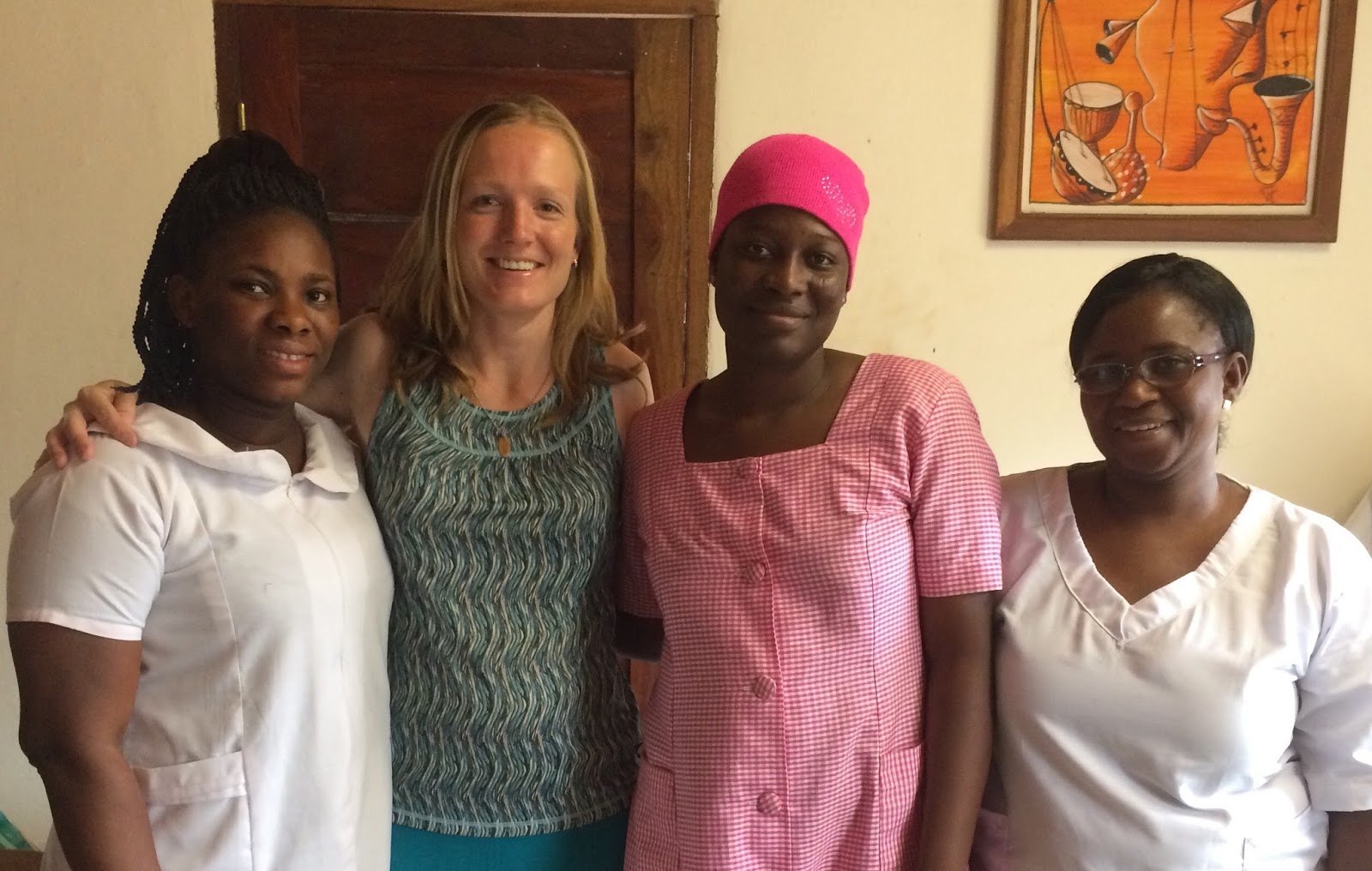
Part of the maternity team in Togo
I’m trying to settle into a new expectation for this season. I have a group of students I meet with on Sunday mornings, I am starting to see formal and informal consults for students and other staff who want help with medical issues, and I am working on editing a medical book meant for health workers in developing countries. In the near future, I’m hoping to help out with menstrual issues and eating disorders at student health. I’ve even just recently been chosen to help with a resolution by this year’s Model United Nations regarding menstrual health hygiene. Of course, I help out with preschool and run around with my kids. It’s a beautiful climate to live in, and there are lots of things to be thankful for. But, for now, the issue of our future and work in the hospital is raw. God knows and I feel His love in the midst.

Fistula Surgery on the Africa Mercy


AFRICA MERCY
If you are unfamiliar with MercyShips, they are an organization that uses a completely volunteer workforce to do life-changing surgeries off the coast of Africa using a hospital ship. The advantage of this approach is that even in a war-torn country with minimal infrastructure, they bring all of their equipment and personnel right to the shore, dock for 10 months, and then move on to another country. I had the privilege of working alongside an experienced fistula surgeon (former Vanderbilt faculty) named Andy Norman. As he mentored me, I was able to mentor a Cameroonian GYN who is part of the medical capacity building program that MercyShips provides. Being fluent in French, I was able to translate for her as Dr. Norman explained various aspects of the surgery in English. We did 30 operations in the three weeks. Over half were fistula cases, and the rest were hysterectomies and prolapse cases that really affected the quality of life for these women.

THE PROCESS
MercyShips provides all surgeries for free, and they focus on surgeries that are not usually done in the country due to requirements for multidisciplinary teams or special imaging like CTs or due to lack of resources. If the surgeries are done in-country, MercyShips provides training so that local surgeons can improve their skills or perhaps learn a different way of doing things. In this way, there is a concerted effort to avoid competing with local doctors and their source of income. Because the surgeries are free, there is quite a demand for the services, and lines are long at screening sites. Some of our ladies came from 3 days journey, sent by the government of Cameroon in buses. I believe they went from village to village and asked anyone with problem of leaking urine or stool to join them on the journey. As a doctor coming to work, the process is very streamlined. The patients have already been interviewed by the screening team. The surgeons then have one or two days of their scheduled time on board to screen the patients. We would see as many as possible, diagnose the problem, decide if surgery was needed, and then put a priority on them. The rest of our days were entirely surgical.
Part of our surgical team. Dr. Andy Norman is center.
A DAY
We made our postoperative rounds to see patients just after breakfast and headed to the OR. The hospital is all on one deck of the ship with wards and beds on one side, and the 5 operating rooms, lab, CT and Xray, and pharmacy on the other side. As you can imagine, there are no windows in this part of the ship and patients and nurses alike enjoy their afternoon time to go up on one of the upper decks for fresh air. There are places for children to swing and ride trikes, but most of the time the women would walk around and sing. We surgeons typically finished surgeries just before an early dinnertime. After dinner, we would go back down to the ward to check on the patients and to consent the patients who were scheduled for surgery the following day.

Beautiful! Patient waiting for her turn to be introduced at the dress ceremony
A PATIENT
One particular patient had been having problems of leaking urine for 10 years. This was not uncommon, as the range was from a few months to 27 years. The sad part of her story was that she had been going from hospital to hospital looking for a solution without result, for 10 years! Indeed, when we filled her bladder with the blue dye, there was none that came out into the vagina that would have indicated a fistula connecting the bladder to the vagina. Although these are the most common type of obstetric fistula--even our name tags said VVF surgeon for vesico(bladder)-vaginal(vagina) fistula surgeon-- they are not the only fistulas we see. There are also connections between the ureter (the tube coming from the kidney before it goes into the bladder) directly to the vagina or the rectum to the vagina. For our patient in screening that day, after further questioning she mentioned that she has blood in her urine once a month, just like her period, but she doesn't have any vaginal bleeding. Bingo! We diagnosed Yousseff's syndrome by injecting contrast into the bladder and looking on CT to see that there was a connection between the uterus and the bladder. So every month, she would have a period but all of the blood would flow into the bladder because it was easier than going through the thick muscle of the cervix. And conversely, only if her bladder were extremely full, the urine would flow into the uterus and then have enough pressure to come out of the thick muscle of the cervix. So she would leak urine intermittently from the cervix and into the vagina, but she would always have her period through her bladder. During a long abdominal surgery, we were able to separate the uterus from the bladder, remove the uterus, and close the bladder.

Putting on makeup prior to the dress ceremony
THE DRESS CEREMONY
The patient is one of many who are so grateful to finally have resolution to a problem that has significantly affected their life. Each woman who has found a cure (or at least a significant improvement in their condition), has an opportunity to be involved in a dress ceremony. They get dressed up in a new dress, their makeup done, and they then dance together down the hall of the hospital deck in their bright new clothes and enter a room of cheering MercyShips crew. It is a highlight. They sing and dance and then (usually tearfully) share their stories, praising God that they were healed. Comically, they usually have to get up one by one to use the bathroom during the ceremony. And I always smile. Imagine needing to go to the bathroom after all those years!

Dancing through the hallway during the dress ceremony

Sunday, November 26, 2017

Good? Or a Letdown?

In my American mindset, I just couldn’t accept that it was too late. A friend of mine from Congo had traveled to Kenya for an interview for a surgical residency program, but in doing so, he was giving up his spot in Kinshasa to take an English exam required for those desiring to study in the US. Rather than losing his registration fee, I had made the suggestion, before he planned the trip, to change his exam site to Kenya. It would be a fee, but not nearly as much as the registration. We both looked on the website and I made calls to Nairobi. We made plans for him to have transportation to Nairobi on the day of the test. As soon as he arrived in Kenya, he got a SIM card and called to make the arrangements, and he had money sent so that he could pay the change fee. This all took several walks to the local shops, and he didn’t have sufficient time to actually make the payment. On his second day in Kenya, as soon as he had a chance after his duties at the hospital, he called to arrange payment. And they said the last day to pay was the prior day. He would no longer be able to take this exam for which he had studied for months. He would forfeit his registration fee. All because he didn’t understand a phrase in English that detailed the deadlines. And I was angry. I felt responsible for not rechecking. I felt responsible for recommending the interview in Kenya in the first place. I was angry.

It was also spiritual emphasis week at Rift Valley Academy. That night, as we worshiped the Lord, the words of the song stung and did not ring true.

Let the King of my heart be the mountain where I run
the fountain I drink from
Oh, He is my song

You are good, good, ohhhhh

You’re never gonna let, never gonna let me down

Ebenezer: "stone of help"
In fact, as the worship leader said to sing it out if we believed it, I stayed silent. I even felt tears welling in my eyes. Because even though I believe that is true for me—I’ve had too many Ebeneezer moments that I can reflect on and see why the Lord allowed circumstances and how He redeemed them—but I did not, in the moment, trust that He would never let others down. I reflected back to our experiences in Congo. Sure, God took great care of our family as we chartered a plane away from the difficult situation and started over in Togo. But our teammates who were left, our Congolese colleagues who carried on, and the patients that I wouldn’t be available for…. What did God do for them? Didn’t our leaving signify an event where God let them down? What about all the Congolese who are suffering and starving because of the political climate created by a few that has caused their money to devalue by over 50%, leaving the common people without means to survive? What about them God? What about my friend who, despite spending a significant amount to come interview in Kenya, and despite making a genuine effort to properly register, and despite his amount of studying, despite all that, he wasn’t able to take the test. Wasn’t He letting my friend down? No, I did not trust Him for my friends.

I was challenged the next day, as I talked to my life coach, to think of how this situation may work out in my friend’s favor. I was still angry with God. I could think of very few reasons why THIS plan was better than the ones we had made. The phrases, “God is in control,” and “He works everything out for good to those that love the Lord,” seem trite and, frankly, unfortunate and often not true. As I prayed to the Lord, I told Him so. I told Him I was angry. My friend said, “I prefer to trust God.” But I was still angry for him. It was almost a dare- SHOW ME, GOD, HOW YOU ARE GOOD.
A field near where I walk and talk weekly with a life coach
As I waited for it, thinking God had His work cut out for Himself this time, I was struck by a couple of sentences written in a devotional by Beth Moore on the book of 2nd Timothy.

As I waited fo

“Not one whit of [a life] experience need be good for a merciful God to use it for good.
He can rob the darkness of the gain of your pain and redeem it powerfully in the light.”

Meaning, it’s perfectly acceptable to say that life sucks sometimes. People get the raw end of a deal. We don’t have to call it good. Jesus didn’t come to heal everyone here on earth. Jesus didn’t come to make everything good now. What did he come for? He came to redeem everyone and everything. Redeem! Not that we have to say it’s good. And the second phrase that is comforting to me, in lieu of, “God is in control,” is
“This didn’t surprise God.”

Although it means quite the same, it doesn’t feel the same to me. A God who is controlling painful circumstances feels different than a God who is never surprised, is prepared to redeem it, is comforting us through it until He redeems it, and who has a plan to make all things new.

In this case, God was up to the task to show me how He was good. In less than 2 weeks, I found out that the mere fact that my friend was studying to take that exam helped him significantly in his interview as the residency program is in English. He was accepted (though not in Kenya, he will be in the equivalent surgical program in Niger!) and this means that having a test result is not necessary for him in his current career path. Rather than losing money as I assumed, he actually saved money from not paying the change fee!

I’m not suggesting that we will always see the reason for difficult experiences this side of heaven, but I am comforted that even if not one bit of an experience feels good, I can long for the time when all things will be redeemed. I was reminded again of this fact while serving on MercyShips in Cameroon last month. I was counseling a woman with terminal cancer who had unfortunately been taken from her village from very far away to come and be screened as a fistula patient because she was leaking stool. As I shared with her that we could not help her recover, and that she would have this sickness the rest of her life (who knows how many days or weeks she has left), I mentioned that Jesus did not come to the earth to heal everything now, but He came so that everything can be healed and redeemed for an eternity. Even if we could heal her with surgery, it would only be temporary, but trusting in Jesus brings peace and healing and restoration that lasts forever.

When I struggle with the goodness of God, the thing I cannot refute (at least haven’t been able to thus far), is that God, as a good Father, allowed His own son, who only showed love to others, to suffer. This Good Father allowed His son to experience hate, betrayal, hunger, to be humiliated and beaten, and to die. I haven’t been able to come up with an experience that would be worse for my own child than what a good Father allowed His son. And He did that for me, the one who is angry over an exam registration fee. Even the thought of the redemption of all the evil in the world was enough for Jesus to trust His Father. The picturing of our reunion and redemption in heaven was “the joy set before him” when He “endured the cross, despising its shame.” And if a good Father can watch His son suffer and use it for good, that same good Father can certainly watch the unnecessary suffering we see around the world and still be called good. 

Wednesday, September 20, 2017

When Potato Soup Makes You Cry


Having proper expectations has been said to alleviate much of the difficulty of a transition. Our move to Kenya should not have been any different. I mean, it is not like we haven’t made international flights with young children or packed (most) all of our earthly belongings or said too many goodbyes and hellos. I remember my mom fondly recalling how fun it was to set up her home after she got married, but that excitement has lost some of its luster now that I’ve set up a new home, in a new country, 4 times in the last three years. And I’ve visited Kenya for extended periods of time. So if anyone should have proper expectations, it should be me, right?
 Kijabe and I go way back... to 2005 when I came as an undergrad student at LeTourneau. This May we met up with a professor of mine who attended school at Rift ValleyAcademy and was on the team in 2006
When Ryan came home from one of his first days of teaching and found me teary-eyed, he knew why. I was struggling with loneliness, struggling to remember where to buy milk and how to get more cell phone minutes and who to hire to work in our home. I was juggling new schedules of Ryan as a teacher and coach and my schedule of when the preschool moms got together or neighbors walked for exercise. My head just felt like it was exploding with all the new information it was supposed to keep filed away, all the while my heart was simply longing to be known without explaining our long complicated story. Our evenings which used to be filled with swims in the Kwilu River and dinner with the Rices in Congo, or more recently, filled with laughter during Kendall-Potter game nights in Togo were now empty slates. So as Ryan looked into my eyes, he gently said, “It’s only been a couple of weeks. How long were you giving yourself until you expected to feel settled?” I looked up at him and sheepishly answered, “A week. We’ve done this so many times before.”

An analogy I like to use is that of jumping into a very cold swimming pool. You KNOW what it is going to be like, you’ve done it many times, but it still SHOCKS you and takes your breath away when you first enter the water. That’s how it feels to move to a new country with small children. First in the airport as you realize you don’t have nearly enough hands to push all the luggage carts needed to transport your stuff and to keep your kids from attempting to get a ride on the luggage conveyor belts behind the counters. Second you hold your breath when you board that first flight and know you must convince your two active children to stay in a 10 square foot space for hours. And then there is jet lag. And the initial inability to communicate either due to lack of language acquisition or lack of a SIM card in your cell phone. They are just experiences you EXPECT are going to be hard, but that doesn’t take away the SHOCK of the journey it takes to make it through to the other side.
Sydney learned that drinking chai is a nice twice a day tradition in Kenya
Here in Kenya, we found someone to help with basic household tasks right away. It was a huge blessing. She has over 20 years of experience, can cook really well, and loves the kids. In preparation for my return to work, we also decided to try out someone who could focus on caring for our precious active kids when we can’t be home, taking them to play at the playground instead of being cooped up at the house while someone is cooking or cleaning. This is where the potato soup comes in. A sweet woman agreed to come a couple of days a week to do primarily childcare, but our trial period wasn't going so well. Sydney ran away from her once and resisted her care, which isn’t so surprising. Living in her 5th country and feeling out of control is a little how I feel sometimes- and Sydney is expressing it by trying to control her very small piece. The nanny had seemed stressed out by the kids instead of enjoying them. To top it off, while the kids were napping during the afternoon, I asked her to prepare a simple potato soup for the evening. Just before she left, potato soup sitting on the stove, she asked me if it was going to get better. Broken, I replied, “They are little sinners just like me. I promise we’ll work on it but I can’t promise it will get better because I don’t know.”
Rift Valley Academy has a lot of space to run... and get lost in!
That night, stressed at the probability we were going to have to try another new person with our kids, stressed that our kids were not behaving and putting that guilt on myself for moving them so much, and stressed that no one would love our kids like their nannies in the past, we started eating the potato soup. And I started crying. It was… really spicy hot. Hence the tears. But the crying continued because the soup was also terrible. It was so thick that we didn’t need a bowl and a spoon but a plate and a fork. Did I mention the soup was really spicy? Little red flecks looked back at me from my bowl. I went over and checked the recipe. Nothing in that recipe was spicy or red. So now I looked at my family who was depending on me for food that night, and I had no plan B. I was failing at staying at home, failing at trying not to stay at home (preparing to go back to work in January), failing at parenting, failing at being a wife.

Before I finish the story, I need to admit something. I dread the question, “So how are you doing?” or “Are you feeling settled yet?” at this point in our journey. Because I want to be honest and foster greater community. Because I know that the person asking usually genuinely cares. But I don’t know what to say. I dread it because I have no idea how to put into words that make sense how I’m doing. It’s been a month now, and I don’t feel settled deep down. Sure, routines are getting established and I spend much less mental energy on simple tasks of daily living. But I am still adjusting to the huge transition of being the primary parent. In nearly 4 years since having Sydney, this is the first time when my primary role is to be a mom and where no one is relying on me as a doctor. It’s hard to say this without guilt pouring in. But any physician who has suddenly stepped away from his/her practice of medicine, any working mom for that matter who has stopped working outside the home, even for a season, has somewhat of an identity crisis initially. I’ve read about it on blogs. I expected it. I knew what was coming. (Picture cold swimming pool again.) But it is still a huge adjustment. I LOVE my kids. I LOVE spending time with them. I am so glad that I get these 6 months to soak up each new word Zack says and each new skill Sydney learns. But I also LOVE medicine and delivering babies and doing surgery and physically working hard and many times saving lives. I MISS talking about medicine in a campus full of teachers. I MISS interacting with patients. I MISS feeling competent.
Who am I? I miss feeling competent.
 Not feeling competent when ALL the milk is anywhere but in a bowl or cup after 5 minutes of my absence.
Mama said there'd be days like this.
I miss feeling competent because, as my primary role during this short season is to be a mom, days that are wrapped up in two tiny people don’t often go according to a plan and don’t often reflect the effort I put forth. Some days I feel awesome and others are train wrecks. It’s the difference between the moment your kids have gotten up from their nap for the third time while the other is still crying himself to sleep, and the glorious moment when he finally falls asleep and your three year old is sitting and “reading” her bible stories. One moment you feel you can’t do this any longer and the next you realize you have time to yourself and can sleep and then you love being a mom again.
Sydney has made a good friend already. Hoping she becomes as dear to the kids as their previous nannies.  
So… the potato soup was the end. And the beginning. A new day came. We asked someone new to come and she has been wonderful so far. Zack has started to sleep through the night and is eating well. Sydney stayed with two sweet families while we went to Malawi and was a “great houseguest” and “so polite” from their words. Encouragement came. In this new season, I need to put into practice what so many working moms turned full time moms have talked about. My kids’ behavior is no more a marker of my worth than the number of surgeries I do or babies I deliver. I need to cling to the fact that I am a child of God. Yes, I’m also a mom, a wife, a doctor, a friend. But the one thing that will not change even with death or disability is that I’m the daughter of a King. Jesus is our rock, unchanging, unfazed in His love for us whether we are helping to save a life or helping wipe another snotty nose.  
I LOVE my kids :)

Monday, July 3, 2017

Air Born

 We were less than halfway into a 10 hour flight when the call was made for medical assistance at the back of the plane. There had already been hints that something was amiss. Chasing around a one year old, I had noticed that they were washing the floor in the back galley and didn’t want children freely coming back for water and snacks. I overheard a flight attendant asking one of the other dads who was also running after his child if he spoke Arabic. So the call for medical personnel did not surprise me. I scooped up my son and walked toward the back. Please, Lord, don’t let this be an old man with a cardiac problem, I thought. Instead, it was a younger-looking woman, sitting in the jump seat that flight attendants use for takeoffs and landings, and though she wore a traditional abaya, I could see on her face that she was in labor. I was so relieved.
Though not our plane, this is identical to the one we flew in. (Photo credit: flyinginireland.com)
You see, an OB/GYN responding to a cardiac emergency could be compared to a Toyota mechanic stopping to fix a VW bug on the side of the road. Sure, we’ve had all the training and theory, but it’s going to take some time for us to remember what the right dose of drug might be needed. In addition, we haven’t likely been keeping up with new recommendations outside of our specialty in an ever-changing field of medicine. So I was relieved. Actually, I was feeling right at home. For those of you who clicked on this blog but don’t know me, I’ve spent the past 3 years overseas, working in limited-resource settings, usually with a translator and definitely without epidurals or many IVs. And for some reason, I’ve had several instances of births in unconventional places. Not one, but two babies were born in my apartment building in France, both requiring my help. At least on the plane, we had plenty of blankets and gloves!!    

Blankets and pillows prepared for delivery. Photo credit: airliners.net
 The flight attendant’s eyes widened as I confirmed that, indeed, her water was broken and her cervix already dilated. After the initial questioning, I thought her baby would be quite premature and I wanted something to help stop her labor. My mind was racing as I scoured the medical kit for their available drugs. However, after further questioning and examination, I felt like she was more likely nearly at term. In that case, I told the flight attendants, we could simply observe her contraction pattern. Her contractions had significantly slowed after her water broke. With nearly 6 hours left, there was a chance she could make it until we landed, especially if her contractions didn’t pick up, but we should be prepared for a delivery in the air.

Our flight path from Lomé to New York (photo credit: cheapoair.com)
Contractions weren’t too frequent, so I suggested we get comfortable. We moved from the back galley makeshift bed of pillows and airline blankets into the back two rows of the airplane. She rested, her dutiful husband recorded contractions, and I spent time with my kids and updated my husband. The flight attendants were able to use that galley for its intended purpose. The only excitement during this time was the frequent trips to the bathroom, which is quite common when a baby’s head in the pelvis is acting like an overweight man next to you in an economy seat. One particular instance, as she was trying to exit the tiny bathroom, her husband and I could not contain our laughter as we watched her snatching the end of her abaya from the clutches of the automatic flushing toilet. Let me tell you: in person it is even funnier than in the movies.. And it sure helps lighten the mood when things are tense and uncertain.

With less than three hours to go, it was becoming painfully obvious, pun intended, that her labor was intensifying. We decided to move back to the galley for more privacy and space to stand and move around. Her husband didn’t leave her side. One or the other of my kids occasionally escaped from my husband to see what I was doing at the back of the plane. My daughter, who has seen a cesarean section from the window of an operating room, gently asked me, “Are you going to break her?” I reassured her that I would not need to, but that the baby would be here soon.

Back labor can be excruciating. From my extensive experience in labors without epidural pain relief, I have found a few tricks to help with pain naturally. Providentially, less than a week prior to our departure from Africa I had learned a new osteopathic technique which can help improve labor specifically when the fetal head is putting pressure on the sacrum. I had been a bit skeptical that I could actually apply this technique with my limited osteopathic experience, but it clearly made her pain more tolerable judging from her body language. And then she turned to me and said, through her husband translating, “Something is coming out.”

Upon examination, indeed, the baby’s head had descended. I turned to the flight attendant and asked how long we had. Thirty minutes was her answer, but then she added that even with an emergency priority landing (meaning we land as soon as we get into the airspace instead of waiting our turn) we would still have a 40 minute taxi before the ambulance could be ready to take her. I looked back at my laboring friend, knowing she would not be able to suppress her urge to push for over an hour. I said, “Well, when you feel like you need to push, go for it.” The flight attendant holding up an extra blanket for increased privacy said in disbelief, “So this is happening. Ok. Well should we ask the pilots to hold the landing?” We had been rapidly descending, and our ears were popping as we laid out extra blankets. I said, “No, we just need to get there as soon as possible. Let’s land!” I said, fearing that any delay could jeopardize a chance at higher level care for her or her baby if it was needed.

She pushed just a few times, holding on to the safety bar used by flight attendants as they work in the galley. I told her husband, “Tell her to trust God that He will help her push this baby out.” And with the next contraction, the head delivered, then the body, and we had a screaming beautiful newborn baby getting wrapped in Ethiopian Airlines blankets. The mama sat down and we quickly put her new baby skin-to-skin to breastfeed, with only a moderate amount of wrangling her battle-scarred abaya to make way for the baby. When the placenta came, we put it in a small trash bag, tied it closed with a string, and wrapped it and the cord up with the baby in fresh airline blankets. It was a lotus birth by default, and it was beautiful.

The flight attendants took everything in stride, but they still had business to do. With just minutes left, they said, “We are assuming she cannot go to her seat for landing. How should we do this?” With her husband on one side and me on the other, we shielded the mama from moving while holding with our free hand onto the same safety bars she had used for delivery. “Ok good.” The flight attendants said as they buckled up in their jump seats. “She can hold the baby. We’ll let you know exactly when we are landing.” With that, this precious new life touched ground for the first time. As we taxied toward a waiting ambulance, the whole crew of flight attendants came back to get pictures with the new family in a joyous celebration. 

My personal photo, edited to protect identity and posted with permission. Notice the food carts behind us.
 Due to the noise generated by the airplane during its descent and the calmness displayed by the mama and the entire Ethiopian Airlines crew, most of the other passengers on the airplane had no idea that a baby had just been born. The paramedics and police and border patrol agents came on and escorted the beautiful family through the plane. The mama went first in a wheelchair, her triumphant abaya looking no worse for the wear. I followed the dad who was carrying the newborn. When he reached the row where my husband and kids sat without me for the last 6 hours, he turned to my daughter and bent down to show her the new baby, just as we had told her a few hours before. Until that moment, there had been little interest in the pile of airline blankets that he was holding, but all eyes turned to the bundle. A flight attendant then pointed to me and said in answer to their questioning eyes, “She just delivered a baby. She’s a hero.” I just pointed to the strong mama who just delivered a baby during crazy changes in pressure and turbulence. For me, it was all in a day’s work. And it certainly was easier than chasing around a one year old for the whole flight.

Photo credit: the proud daddy- taken in the hospital.

Sunday, January 15, 2017

Life As Precious

It wasn’t a typo. I’m pondering what makes one life as precious as another, or if there are instances where one life is valued higher than another.


In Africa, or at least in French, there is a term used for pregnancies that come after a period of infertility or recurrent miscarriage. Grossesse precieuse. Translated: precious pregnancy.
At first this drove me nuts. Every life is precious, I would tell our medical students. Every pregnancy is precious. We don’t treat labor and delivery differently just because it was difficult for her to get pregnant. We make calculated evidence-based decisions about when to use different medications and when to intervene with a C section. Risk vs benefit. Medicine as science, right? Or not. Never forget that medicine is also an art. And when someone has waited over 10 years and had a few infertility procedures and their baby is near term, it is so hard to treat their pregnancy the same as a teenage mom without support or the same as a momma with 4 kids already at home. In our human-ness, we cannot overlook the relative precious nature of the former pregnant woman’s baby as we make decisions.

Sydney gets early life lessons. This is a very small (living) precious premie baby
whose head just barely outsizes the suction bulb.
I had a new experience this week.* Ryan mentioned that I’d better be glad most days aren’t so exciting. Routine scheduled surgery for possible ovarian tumor vs normal mass. The general surgeon volunteered to scrub in on the case for an extra pair of hands, which I was grateful for. It was a complicated surgery, and got further complicated when she needed to be intubated because her spinal anesthesia had worn off. One attempt to intubate failed. Oxygen saturation recovered but not completely with a facemask of oxygen. Second attempt to intubate seemed successful at first, but the oxygen saturation just kept going down. The general surgeon broke scrub to assist the anesthetist to listen for breath sounds in the lungs. I waited next to the open abdomen, intestines spilled out but covered at this point with a white laparotomy sponge. And then I saw the flat line of no pulse. “Does she have a pulse?” I must have repeated at least 5 times. There was a search on her thick neck, her wrists, without result. I then broke sterility and tried to find a femoral pulse. Nothing. Start doing chest compressions. Her heart has stopped and she is dying. That tube went into the stomach instead of her lungs, so her heart stopped beating because it couldn’t keep doing the work without oxygen feeding that big muscle.
Photo credit: Rose Finley
Oxygen was being given by a facemask, but that was less than ideal. We still needed an airway. I switched off with the general surgeon who was doing chest compressions so that he could prepare to do a cricothyrotomy- an emergency airway cut directly into the cricoid cartilage (hard part by your voice box). As I was doing the work of circulating blood throughout her body with the chest compressions, I felt oddly calm. Watching the pulse on the monitor match my efforts- speed up when I increased the frequency of compressions, and slow when I fatigued- I pondered life. This woman had cancer. She was not very young. I didn’t feel panicked if we couldn’t resuscitate her. Was her life less precious? If she had young children relying on her, would that make this moment more terrifying? What about hypothetical situations where there is a prisoner or a very old person or someone with a chronic psychological problem and there is a bad outcome? Does that affect my value judgment on life?
Image result for cricothyrotomy
Rhetorical questions. Important questions. (Further thoughts on triage and deciding how to use limited resources were brought up in an NPR episode called, “Playing God.” It recounts Hurricane Katrina and various war situation triage situations.  http://www.radiolab.org/story/playing-god/# )

The cric was finished in short order, and oxygen levels rose. Still I was doing the work her heart should have been doing. And then, puff, I was startled back to the present by the monitor suddenly reading a heart rate of 110, faster than my cadence. “Is she back?” I asked almost in disbelief. Sure enough, the surgeon nodded. She has a pulse! We gingerly returned to our operation, having left the sterile field and not knowing if we’d return. We regloved and regowned and washed what we could with betadine. We uncovered her intestines and returned them into her abdomen, closed the remaining open cavities as quickly as possible, and prayed as the blood transfusion was running in that she would not have significant bleeding after this and that she would fully recover.

She seized that night, and I actually winced as I walked by the morgue on the way in the next day, hoping against hope that I wouldn’t see that it had been used overnight to store her body. But she wasn’t in the morgue. She was alive. Her sister said what we were all thinking, “God wasn’t done with her, so He brought her back to us.” She improved very quickly, especially considering her wild operation experience. Her grateful smile was so wide, and she just wanted to walk and eat, even with a tube still in her neck. Over the next few days, she continued to make improvements, her tube was removed, she walked outside in the fresh air and I saw her look up into the sunny sky, so grateful for life. We discharged her less than a week after she nearly died. It isn’t the end of her story, though.

Let’s go to another patient briefly. One who initially presents with her water broken and a very premature baby inside. She does everything we ask of her, making the hospital her home for almost 2 months, undergoing frequent tests to ensure the baby is growing and doing well despite the lack of fluid. And then just two weeks before our ideal timing for delivery, she starts bleeding, needs an emergency C section, and gives birth to a premature infant with a good chance of living. But despite oxygen therapy and intensive care, the baby dies, its lungs underdeveloped for how old the baby is because the amniotic fluid which normally fills the lungs in the womb has been lacking. I went to her bedside the day after, and I put my head next to hers and we just cried. Why? Why didn’t she just deliver 2 months ago and mourn and move on? Instead, there was hope and waiting, then emergency surgery and intensive care and death. Is life as precious when a lot of effort has been put forth to avoid a death as opposed to a sudden death? I suppose if death were the enemy, I would never make sense of this. But death is not the end. During her time with us, she and her family learned a lot more about a historical figure that she has grown up respecting as a prophet, but not known fully—Jesus. She now has heard about Him and what He has done to defeat death, pain, and separation from God. If it took a little life inside of her to introduce her to her Savior, then that life was as precious as heaven itself.

Is life as precious when it is unplanned? Or when that unplanned life risks the life of one (more) precious? A very young teenage girl who was forced to undergo an abortion in her own house came in with sepsis. Pulse racing, blood pressure low, fever raging, and belly very tender, we rushed her to surgery. “Smells like they perforated her bowel,” a visiting surgeon mentioned as we were prepping for surgery. “Or necrotic [dead] uterus,” I mentioned, thinking of advanced cervical cancer patients. When we opened her abdomen, there was no stool, thankfully, but almost half of her uterus had to be removed because it was dead. It had been perforated with the instrument used for abortion, and then infection had set in and was killing the uterus slowly. Thankfully her bowel was all healthy. It had escaped the instrument used for abortion. I’m unsure if she’ll ever be able to have a child safely; only time will tell. But she is alive.

Pic to the left is the uterus- the black part is all dead, the hole near the bottom left where the instrument poked through. The remainder of the uterus is pink and in my hand.


Back to our ovarian cancer patient. She was doing well as an outpatient for a few days, getting daily dressing changes. But she took a turn for the worse, had shortness of breath, started vomiting, and eventually was readmitted for a second surgery to reclose her abdomen as the infection had made our first closure weakened. She came out of the second surgery, still smiling, still grateful for another day of this precious life. And that’s all she was given. She died suddenly less than 24 hours after her second surgery. Again, why? Why did she survive the initial surgery and seemingly do so well? Her family all knows and loves Jesus, and they were praising God for healing her just as we pray before each surgery- because we know that God is the one who heals and who gives us wisdom when we ask. And each person who is healed or baby whose life is saved we pray that their healing will be used to glorify God.

I don’t have the answers. The fact of the matter is that God chooses to heal, sometimes miraculously, sometimes despite us, sometimes directly because of our actions. Sometimes God allows life to be extended, and sometimes God allows life to slip away. I don’t have answers, but I do know that God watched His own Son to suffer and die, precisely because He found our lives so precious to Him that He would give up heaven to conquer death. As we are making decisions, unfortunately sometimes feeling as if we are “playing God,” as the NPR episode mentioned, we need to give ourselves the grace that God has so freely given to us, and to treat all life as precious.

*I write these stories and don't necessarily publish right away. I try and get patient permission to take photos.  I also try to use a random picture that is similar to what I'm talking about, but usually isn't the particular person. This protects patient identity a bit. Although there are no laws as in the US, there is certainly common sense and I'm not blind to the fact that internet is available in most places of the world. 
Our favorite moments of the day are when we walk home at lunch or after work and our precious kids run out to greet us with a big hug. (Sydney was pretending to be shy... or she just woke up. She's rarely cuddly, but I'll take it!)

Friday, October 28, 2016

Letting Your Pessaries Fall Where They May

Sydney with the OB nurse (who got hit with the flying pessary)
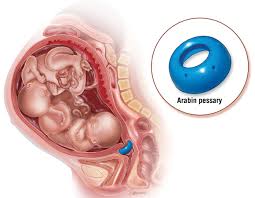
You know the phrase, let your chips fall where they may? Getting into a rhythm here in Togo has taken a few weeks, but we are beginning to see some of the dust settle. Especially the first week, though, felt like an interesting dance to try to figure out new systems and expectations and workload and balancing kids and new househelp and new jobs. After several particularly busy days wherein I felt like I was expected to be doing surgery, running labor and delivery, rounding, and seeing patients in GYN clinic and supervising OB clinic, all at the same time, I was very tired. The day before, I had left 9 patients waiting to see me and simply put them off until today. And today, as I was trying to get wrapped up, several OB patients were complicated and I needed to stop and see them. It was already beginning to get dark, and I knew that my husband wasnt likely home yet because he was playing soccer that afternoon, and I knew we were having company over for dinner, in 30 minutes. So I was stressed. An OB patient with history of incompetent cervix now with twins had a shortened cervix. She probably needed a cerclage or pessary to reduce her risk of preterm delivery (OB's reading this, I know there is no evidence in twins.)

I barely had time to discuss it with her, and quickly found a pessary that would probably fit. This particular kind folded, and to put it in place supporting the cervix, one usually uses gel. So I did. And then I folded it. And in my hurry to place it, the thing slipped right out of my grasp, flipped up in the air and flew across the room and hit the poor GYN clinic nurse on the shoulder. She didnt bat an eye, but bent over and picked it up to go out and clean it. I just stood there with my glove on, pondering how incredibly funny it was to have flying pessaries, and how thinking of that was going to help keep my stress level down as I finished out the final patients and headed home for a busy evening. Things will get better, well settle into a routine, but until then, a few more flying pessaries to lighten the mood may be in order. And well just let them fall where they may.

Lets back up a couple of days. When we arrived in Togo, there were a couple of visiting retired OB/GYNs who were taking care of essential clinical care and being on call, so I was able to concentrate on unpacking and organizing life. I took over on Thursday, rounded with the departing OBs and reviewed their patient lists and treatment plans. I was on call, which means I admit patients, am first call for labor and delivery, and can go home for night but need to be available for 24 hrs. It wasnt super busy, but there always seems to be a question about something around 5:30am that inevitably wakes me and little Zack for the day. Friday I was somewhat tired, but went in for a C section I had put off for the morning, as it wasnt urgent. It was routine. Second baby. Second C section.

But I struggled getting through tough fascia. I struggled getting the baby out through an unforgiving scar. And then her uterus wouldnt contract. Refused. As in, it NEVER felt firm. I did what Ive been taught to do- gave IV Pitocin, gave IV methergine, gave rectal misoprostol, gave more IV Pitocin, gave IM methergine, slapped and massaged and hit and pleaded with that uterus to contract and get firm. She was a young patient, unlike the momma we had done a C-hyst on for her 9th pregnancy having just given birth to triplets almost at their due date. THAT made sense. If I was a uterus and had carried 9 pregnancies, two of which were triplet pregnancies, I would probably refuse to contract too. Id be done too. And a hysterectomy after C section in a momma like that is only done when necessary, but it is an easy decision when they bleed. For young patients without many children, this is a VERY hard decision to make.

So I refused to give up on this uterus. I had already sewn the uterine incision in two layers, but there was blood oozing from the suture lines, from the inside of the uterus which wasnt contracting (normally this clamps off blood vessels), and I knew that there was likely a huge amount of blood underneath the surgical drape because the cervix is open. I tried a B-lynch suture around the top of the uterus to force it to be smaller. I scrubbed out of the sterile field and packed the inside of her uterus with three foley balloons to make a uterine sandwich with the B-lynch suture holding it clamped down from the outside and pressure from inflated balloons on the inside.
I noted that there wasnt as much blood in-between her legs as I had feared. Weird. I scrubbed back in. I oversewed a bleeding area to try to stop oozing. I was tired. So I decided to put the uterus back in the abdomen (I know this is creepy to non-medical folks, but we can easily pull the top of the uterus and the tubes and ovaries out of the abdomen during a C section). I tried really hard. Remember that tough fascia. Yeah. Still tough. I actually ended up cutting the skin and fascial incision open wider to put the uterus back in! It had already been big enough for the baby to come out, and then the uterus right after, but now I couldnt get the uterus to go back in without cutting my incision wider!?! And she continued to ooze. It was odd. With how boggy her uterus felt, she didnt have a ton of blood between her legs nor was blood pouring out of the incision site. But a non-contracting uterus almost always requires action, so I needed to make a decision of whether to do a hysterectomy to save her life. Surely she would just continue to bleed until there was no blood left. After all, 500mL of blood is going to the uterus at the end of pregnancy every minute.

You know those visiting OBs? I knew they were still around for another hour before their vehicle left to take them back to the capital for their flight back to the US. I called one of them in. I just felt that as long as they were there as a resource, I should get their second opinion. One graciously came and scrubbed in. We took a long look, evaluating the amount of blood lost, evaluating the still soft and very large uterus. She finally said, well, lets use Surgicel and close her. You might have to take her back to the OR later, but her vitals are fine, she isnt bleeding that much even though her uterus is not contracting down, and she might do well! So I used the gray mesh called Surgicel that helps small oozing vessels to coagulate, and I closed the fascia and skin.

Even though I was post-call, I couldnt get her off of my mind. I told the on call family doctor (Dan) to keep a close eye on her. I worked until evening, then headed home to the family after working a full day and being on call at night and then working a full day. I hadnt even finished eating the last bites of dinner when Dan walked by the house on his way in, saying that her blood pressure was very low now and he was going in to check on her. I knew what that meant. She had lost enough blood now that her uterus needed to be taken out. I kissed my husband and kids goodbye, swallowed a few more bites of dessert, and changed back into scrubs. I was sad, but I was convinced that she either would die or Id take her uterus out.

But, I met Dan walking out of the hospital. He said that she didnt clinically look bad, the ultrasound didnt show free fluid, and her repeated blood pressures were not as low. He thought she was stable. I wanted to be sure, so I went in and repeated the ultrasound and pushed on her belly. Indeed, she didnt look like she was bleeding to death. So I went back home in time to put the kids in bed, hoping I wasnt just delaying the inevitable until the middle of the night. 
In the maternity ward with a happy ending
Sure enough, I got a call from Dan at 2:30am. Even though I wasnt technically on call that night, Im still the one they look to if there is a serious problem as I have the most OB experience of the doctors here. But it wasnt about her. It was a new patient who had been emergently transferred here because she had a hand presentation- instead of the head coming out first, the hand had delivered and the baby had died in the labor process already. She was only 34 weeks. Dan asked my advice, and I recommended trying to avoid C section for a dead baby unless the mom is unstable or had had previous C sections and it seemed dangerous. Its not difficult to deliver by C section- just deliver as you would a breech presentation, I told him. I went back to sleep. At 4:30am, I was awakened again.

**************************Notice- this next part is extra medical, so if you don't care to read it, just skip to the "One Quiet Night" picture.****************************************

This time, it was to do a hysterectomy, but NOT on the patient I had been so worried about. No, it was for this new patient. They had put a foley catheter in her bladder in preparation for delivery, and it had returned as straight up blood. Concerned about uterine rupture, Dan had called the general surgeon back up to do a C section for probable uterine rupture, as he did not want to wake me. But when they opened her abdomen and had taken down the adhesions, the whole bottom portion of the uterus was ballooned out and dark red, as if the placenta had invaded through the anterior uterine wall and was now in the bladder. Indeed, the foley catheter balloon could be felt at the top of this red mass.
Most bizarre pregnant uterus 
I had never seen this before. Placenta percreta? That means the placenta would not come out easily; she would need a hysterectomy, and even then, the placenta was likely invading the bladder so how would we repair that? I decided to start with the known part. I split the uterus front to back. Sure enough, there was anterior placenta and baby feet. As soon as I ruptured the amniotic sac, the big purple mass which looked like the invading placenta simply collapsed. And we saw the babys head where I thought the bladder was. I tried pulling the baby out by its feet, but the muscular part of the uterus was contracting too much (opposite problem as previously).


So I continued to cut down anteriorly until I had completely transected the anterior part of the uterus and it was now filleted open in right and left halves. To my surprise, the placenta easily came out. And then the baby did. Now we just had two halves of a uterus to finish removing. It was easy enough to detach the remaining posterior cervix from the vagina. We left the ovaries, and clamped along each side of the broad ligaments until we got underneath the cervix. With that, the two halves of the uterus were removed. I tried to find some remnant of anterior vaginal wall to sew the posterior wall to in order to close the opening, but it wasnt clear. The remaining large purple part still had a foley catheter which was palpable, so that was the bladder. Its surface felt extra thick, so I decided to take part of that tissue in my bites in order to close the vaginal opening to make a cuff. Nothing was bleeding, so we took one last look at her abdomen and then closed her fascia and skin.

I left around 7am, scratching my head and wondering what in the world I had just seen uterine rupture which happened a while ago? A pregnancy that grew within the old cesarean section scar and slowly opened it? bizarre. And I was incredibly thankful that Zack hadnt woken up yet wanting to eat. Not 10 minutes after I walked through the door, he started whimpering to eat, and I took him and cuddled with him and he nursed. And I thought. Wow, I just did a hysterectomy, but it wasnt on the patient I thought it would be on. Wow, God did a miracle and the first mom is doing well. Wow, Im tired. Wow, I hope things slow down. I was on call the next day, Sunday, again, but it was as if I had played the One Quiet Night card in the game of Pandemic. After regular rounding and seeing that both post-op patients were doing well, there were no further surgeries or emergencies. Eerie.

The next week started out busy again with surgeries, and by Tuesday, there were flying pessaries. Thats why I was stressed. A short-termer pace is unsustainable long-term, especially with a family and young kids. Well let the pessaries fall where they may, but only after we make adjustments, decrease expectations to a reasonable level, and try to ensure that these kind of weeks are the exceptions and not the rule. May God give us wisdom, the needed One Quiet Night, and a few more comedic moments to help us laugh, even if its a pessary flipping end-over-end across the exam table.